
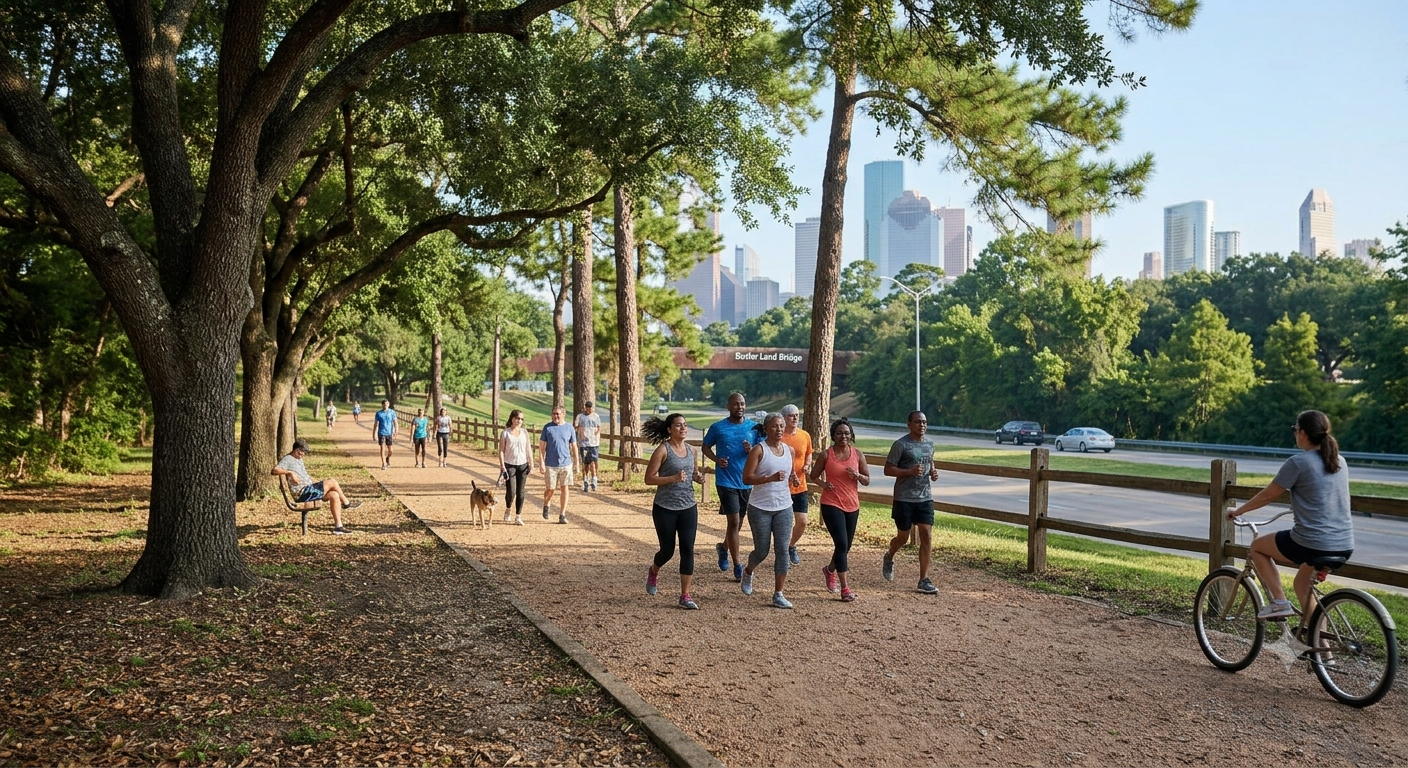
If you are a Bellaire resident facing unicompartmental knee replacement surgery, you are probably wondering how fast you can go back to running the loop along Memorial Drive Trail. Understandably, recovery after a surgical procedure comes with a multitude of concerns. Fortunately, board-certified Dr. Berkman understands the most common fears and concerns patients have about getting back to their everyday life after knee surgery and is addressing them in this article.
Get Quality and Timely Treatment
Why Unicompartmental Knee Replacement
The knee is made up of three compartments: the inner side compartment is called medial, the lateral compartment is on the outer side, and the patellofemoral compartment is located behind the kneecap. For many people, damage to the knee is most prominent in only one and not the whole knee, hence the need for “uni” (one) + “compartmental” surgery, also called partial knee replacement. The damage can stem from arthritis (most commonly affecting the medial compartment), wear-and-tear, or an injury.
Who Makes a Good UKR Candidate
Good candidates generally have:
- Arthritis confined to one compartment only (confirmed by imaging and sometimes exam under anesthesia).
- Intact ACL (since the implant relies on the ligament for stability).
- No significant deformity. Mild-to-moderate misalignment is fine, but severe bowing or knock-knee usually isn’t.
- No significant inflammatory arthritis (like rheumatoid arthritis), since that tends to affect the whole joint, not just one part.
- Reasonable range of motion and no severe flexion contracture.
👨⚕️ Related Content: What Happens When a Unicompartmental Knee Replacement Fails? About Revision Surgery in Bellaire, Texas
Partial Knee Replacement Recovery: 3 Tips
While the procedure itself takes only around one hour, recovery takes longer (around six weeks to return to usual activities) and is gradual.
☝ What most people don’t realize is that several factors directly contribute to their recovery: their activity levels before surgery, their age, and whether they have other conditions.
Below, board-certified and 2025’s MHROH Physician of the Year Dr. Eric Berkman is sharing 5 pieces of advice to make the most of recovery and get back to the activities you love in Bellaire, Texas.
Plan Ahead
“An ounce of prevention is worth a pound of cure” never rang so true. While it is true that you will be able to walk out of the OR, you will need a hand with daily activities that are sometimes taken for granted, for example:
- Taking a shower.
- Cleaning (as in crouching).
- Cooking (standing for long periods of time).
- Going up and down stairs.
Planning ahead means:
- Asking someone you trust to lend you a hand when it’s time to clean or cook.
- Hiring a person to help with housekeeping.
- Buying frozen meals in advance.
- Securing handrails along any stairs in the house.
- Getting a bench for the shower.
- Clearing the floor of anything that might lead to a tripping accident: chords, rugs, toys or loose carpets.
👨⚕️ Related: Unicompartmental Knee Replacement in Bellaire, Texas: Mobility and Activity Levels After the Procedure
Knee Pain Management: NSAID
Your knee will be sore after the procedure due to inflammation to the site. For effective pain management, Dr. Berkman usually prescribes over-the-counter nonsteroidal anti-inflammatory drugs (NSAIDs) when safe and monitors intake and pain levels. Steady anti-inflammatory coverage controls swelling consistently, therefore it is also combined with acetaminophen and conservative pain management techniques such as RICE.
It is important that you follow your surgeon’s specific instructions because he will be the one determining your particular risk factors against the benefits.
RICE to Recover for Unicompartmental Knee Replacement in Bellaire, Texas
R: Although you’ll be able to walk right out of surgery, the R in RICE indicates that rest is advisable. However, “rest” doesn’t mean lying still; it means balancing recovery rest with guided movement. While the first day or two involve significant rest, for the subsequent time, effort is indicated to be gradual. Dr. Berkman will indicate a specific, personalized protocol which you should follow closely for optimal results.
I: To help relieve swelling and pain, apply ice on the area. Ice helps reduce blood flow and therefore limits the amount of fluids, inflammatory cells, and blood flowing into the tissue. Apart from that, the cold slows down the pain signals going to the brain.
C: External compression helps push blood and lymphatic fluid back to the heart, aiding circulation. And, just like ice, gentle compression also helps reduce swelling. Always follow Dr. Berkman’s recommendations to apply the method correctly.
E: You are standing or moving, gravity pulls blood and fluid downward. Elevating your knee above the heart level reverses this, resulting in less opportunity for inflammation.
FAQ
When can I put full weight on my knee after surgery?
Most patients with a partial knee replacement can bear weight as tolerated almost immediately, often starting the same day or the day after surgery, using a walker or cane for balance and support. This is one of the advantages of UKR over total knee replacement — the recovery is generally faster because less bone and tissue were disrupted. Your surgeon will confirm your specific weight-bearing status based on how your surgery went.
When can I drive again?
Typically somewhere in the 2–6 week range, depending on which knee was operated on (right knee driving usually takes longer since it controls the brake/gas), how well you're off narcotic pain medication, and whether your reflexes and knee strength are back to a safe level. Your surgeon will clear you specifically rather than going by a general rule.
When can I return to normal activities like walking without a cane or climbing stairs comfortably?
Many patients are walking without an assistive device somewhere between 2–6 weeks, with continued improvement in stairs, longer distances, and daily activities through the 6-week to 3-month mark. Full recovery, including resolution of most swelling and soreness, is often cited around 3–6 months, though some patients continue to see subtle improvements up to a year.
In Need of Knee Surgery in Bellaire, Texas?
Bellaire, Texas, boasts MHROH 2025 Physician of the Year recipient Dr. Berkman, a board-certified orthopedic surgeon specializing in surgical knee procedures like unicompartmental knee replacement. Being in the hands of a peer-recognized specialist is the best guarantee for a safe recovery, taking care with every step, and avoiding setbacks. Schedule an appointment and start preparing for a smooth, successful, and complication-free recovery today.
RECOVER YOUR MOBILITY